
Laatste Avondmaal
1621 - 1625
Medium
etching
Dimensions
56; 78
Rights
Public Domain
About this artwork
ets en gravure
Art Historical Context
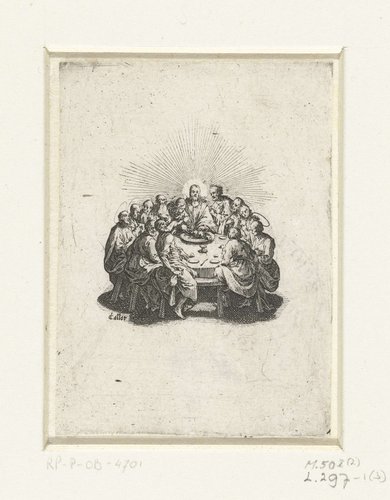
**Laatste Avondmaal (The Last Supper)** *Jacques Callot,1621–1625, etching, 78 × 56 mm* Jacques Callot, a masterful French printmaker of the Baroque era, created *Laatste Avondmaal during his prolific period in the 1620s, a time when intricate religious imagery flourished amid the Counter-Reformation. This tiny etching—barely larger than a postcard—depicts the biblical scene of Christ's final meal with his disciples, a subject central to Christian devotion. Callot, who worked for the Medici court in Florence before returning to Lorraine, excelled in translating grand narratives into intimate formats, making sacred art accessible to a wide audience through affordable prints. Etching, Callot's signature medium (noted here alongside engraving techniques), allowed him to achieve astonishing detail with fine, expressive lines etched into a metal plate using acid. In this minuscule scale, he captured the emotional tension and crowded composition typical of Baroque drama, showcasing his innovative use of multiple biting stages for depth and texture. Such technical prowess made his works highly sought after, bridging elite patronage and popular piety. This piece exemplifies Callot's legacy in printmaking, influencing generations with its precision and narrative power. Visitors, imagine holding a window to 17th-century faith in your palm— a testament to art's ability to inspire across centuries. (198 words)
About the Artist
Jacques Callot · 1592–1635
Jacques Callot (1592–1635) was a French printmaker and draftsman from the Duchy of Lorraine, widely regarded as one of the first great artists to practice the graphic arts exclusively. His more than 1,400 etchings chronicled the breadth of 17th-century life, from Medici court festivities to the brutal realities of warfare. Callot revolutionized etching through technical innovations including the é...