
Labret
Unknown Artist
Medium
Jadeite
Dimensions
H. 1 1/16 in. (2.7 cm); W. 9/16 in. (1.5 cm); D. 5/16 in. (0.8 cm)
Classification
Jade
Culture
Mexico (Hill of Texcotzingo)
Department
Asian Art
Museum
Metropolitan Museum of Art, New York, NY
Credit
Gift of Heber R. Bishop, 1902
Accession Number
02.18.308
Rights
Public Domain
Tags
Art Historical Context
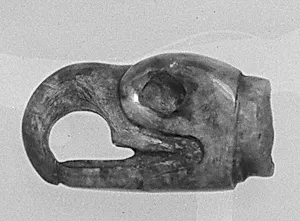
This delicate jadeite labret, a small plug worn in a pierced lower lip, hails from the Hill of Texcotzingo Mexico, a site linked to ancient Mesoamerican cultures Carved from prized jadeite—a vibrant green stone revered for its rarity and symbolic ties to life, fertility, and the divine—the piece measures just over an inch high, showcasing the extraordinary precision of pre-Columbian artisans. bird motifs, suggested by the design, evoke the spiritual realm, as birds often represented messengers between earth and sky in Mesoamerican iconography. Labrets like this were status symbols among elites, signaling wealth and ritual importance in societies such as the Aztecs or earlier groups near Lake Texcoco. The translucent quality and smooth polish of the jadeite highlight masterful lapidary techniques, where craftsmen shaped hard stone using abrasives and patience, transforming raw material into intimate adornments. Though the artist and exact date remain unknown, such objects illuminate daily and ceremonial life in ancient Mexico. A gift to the Metropolitan Museum of Art from Heber R. Bishop in 1902, this labret now resides in the Asian Art department, reflecting early 20th-century collecting that bridged global jade traditions. Visitors, marvel at its timeless elegance—a tiny testament to Mesoamerica's artistic ingenuity.