
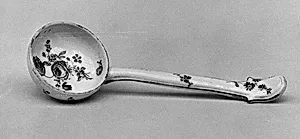
Ladle
ca. 1756–59
Medium
Hard-paste porcelain
Dimensions
Length: 4 5/8 in. (11.7 cm)
Classification
Ceramics-Porcelain
Culture
German, Frankenthal
Department
European Sculpture and Decorative Arts
Museum
Metropolitan Museum of Art, New York, NY
Credit
Gift of Irwin Untermyer, 1948
Accession Number
48.170.5
Rights
Public Domain
Tags
Art Historical Context
This delicate ladle, crafted by the Frankenthal Porcelain Manufactory around 1756–59, exemplifies the golden age of German porcelain production. Operating in the Palatinate region of Germany, the manufactory—founded just a year earlier—quickly gained renown for its luxurious hard-paste porcelain, a technically advanced material fired at high temperatures to achieve the translucent strength of prized Chinese imports. At just 4⅝ inches long, this piece blends functionality with opulence, likely used for serving sauces, punches, or confections at aristocratic tables. Frankenthal's output embodied the exuberant Rococo style, characterized by intricate floral motifs—evident here from its decorative tags—asymmetrical designs, and vibrant enamel colors often accented with gold. These ladles were not mere utensils but status symbols during Europe's "porcelain mania," showcasing the manufactory's mastery of painting and gilding techniques on a durable, white body. Produced under the patronage of local nobility, such objects highlighted Germany's rivalry with leaders like Meissen in the decorative arts. Today, housed in the Metropolitan Museum of Art as a gift from Irwin Untermyer in 1948, this ladle offers a glimpse into 18th-century refinement, where everyday silverware evolved into sculptural artistry. Its survival speaks to the enduring appeal of Frankenthal's whimsical, flower-adorned ceramics.