
Lady Guildford (Mary Wotton, 1499–1558)
Hans Holbein the Younger
About this artwork
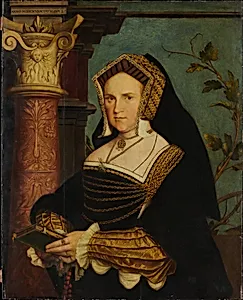
Behold the elegant portrait of *Lady Guildford (Mary Wotton, 1499–1558)* by Hans Holbein the Younger a masterpiece of Northern Renaissance portraiture now housed in the Metropolitan Museum of Art's European Paintings collection. Painted in oil and gold on oak, this work captures the poised nobility of Mary Wotton, of Sir Henry Guildford a prominent figure at the court of King Henry VIII. Holbein a German-born artist who rose to fame in Tudor England as the king's principal portraitist, likely created this around the 1540s, though the exact date remains unknown. The lavish use of gold highlights her status, infusing the panel with a luminous, jewel-like quality typical of elite commissions. Holbein's genius shines in his meticulous realism and psychological depth, rendering fabrics, jewelry, and expressions with astonishing precision. The oak support, a durable choice for portable panels, allowed such works to travel between royal courts and noble homes. Measuring 32⅛ x 26⅛ inches, this intimate yet grand portrait exemplifies how Renaissance artists elevated women’s roles through symbolic attire and dignified poses, blending Flemish detail with Italianate grace. As part of William K. Vanderbilt's 1920 bequest, it offers a window into 16th-century English aristocracy, where portraits like this preserved legacies amid political intrigue. A testament to Holbein’s enduring influence, it invites visitors to ponder the life of a Tudor lady whose gaze still commands attention centuries later.