
Lake George
John Frederick Kensett, 1869
About this artwork
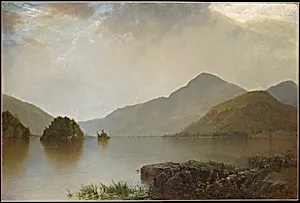
John Frederick Kensett's *Lake George* (1869) captures the serene beauty of of New York's most cherished natural landmarks, reflecting the 19th-century American fascination with the wilderness. As a leading figure in the Hudson River School and Luminism movement, Kensett painted during a post-Civil War era when artists celebrated the nation's landscapes as symbols of divine harmony and national identity. This large-scale oil on canvas (44 1/8 x 66 3/8 in.) invites viewers into a tranquil vista of shimmering waters and distant hills, evoking a sense of peaceful escape. Kensett's mastery shines in his Luminist techniques: subtle glazes and fine brushwork create ethereal light effects, with soft atmospheric haze blending sky, water, and shore. Unlike the dramatic storms of earlier Romantic landscapes, his work emphasizes quiet luminosity and precise detail, highlighting the medium's versatility for luminous depth. Displayed in The Metropolitan Museum of Art's American Wing, it entered the collection through the generous bequest of Maria DeWitt Jesup in 1914. This painting not only showcases Kensett's refined style but also underscores Lake George's cultural role as a retreat for artists and tourists, bridging art with America's emerging environmental consciousness. A timeless invitation to reflect on nature's quiet grandeur.