
Lake George, 1872
John Frederick Kensett, 1872
About this artwork
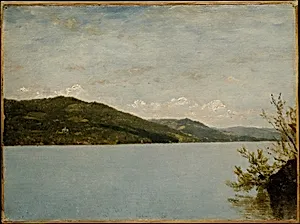
John Frederick Kensett's *Lake George* (1872) captures the tranquil beauty of New York's Lake George, a beloved subject among 19th-century American artists. As a leading member of the Hudson River School Kensett painted this intimate oil on canvas during the height of Luminism, a movement emphasizing serene, light-filled landscapes that evoke a spiritual connection to nature. Measuring just 10 1/8 x 13 1/2 inches, the work reflects the era's fascination with the American wilderness as a symbol of national identity, painted shortly after the Civil War when such scenes offered solace and patriotism. Kensett's masterful technique shines in his precise brushwork and subtle atmospheric effects, where soft glows of light dance across the lake's surface, hills, and distant shores. This small-scale study exemplifies Luminist principles—avoiding dramatic narratives for contemplative realism—highlighting his skill in rendering reflections and ethereal skies. Donated to the Metropolitan Museum of Art in 1874 by Thomas Kensett, likely a family member, it entered the collection early, underscoring its immediate recognition as a gem of American art. Today, in The American Wing, *Lake George* invites visitors to pause and appreciate how Kensett transformed everyday scenery into timeless poetry, bridging 19th-century exploration with enduring environmental reverence.