
Lamp
Unknown Artist
2nd–6th century
Medium
Earthenware; molded
Classification
Ceramics
Department
Islamic Art
Museum
Metropolitan Museum of Art, New York, NY
Credit
Edward C. Moore Collection, Bequest of Edward C. Moore, 1891
Accession Number
91.1.1615
Rights
Public Domain
Art Historical Context
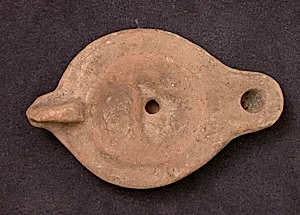
This elegant earthenware lamp, dating from the 2nd to 6th century, hails from the early centuries of what would become the Islamic world, reflecting the artistry of late antique traditions in regions like the eastern Mediterranean or Near East. Crafted by an unknown artist, it exemplifies everyday ceramics that bridged Roman, Byzantine, and emerging Islamic cultures. Displayed in the Metropolitan Museum of Art's Islamic Department, it entered the collection through the generous bequest of Edward C. in 1891. The lamp's molded construction—a technique involving pressing clay into reusable molds—allowed for efficient production of intricate designs, often featuring geometric patterns or motifs suited to both function and decoration. Earthenware, fired at lower temperatures than stoneware, was abundant and practical, making such lamps ubiquitous in households, synagogues, churches, and later mosques for oil-burning illumination. Culturally, these lamps illuminate daily life in a pivotal era of cultural exchange, where light symbolized knowledge and divine presence. Though simple, this piece whispers of the ingenuity behind the scenes in ancient workshops, inviting us to ponder the hands that shaped it amid history's turning points.