
Lamp
Unknown Artist
2nd–6th century
Medium
Earthenware
Classification
Ceramics
Department
Islamic Art
Museum
Metropolitan Museum of Art, New York, NY
Credit
Edward C. Moore Collection, Bequest of Edward C. Moore, 1891
Accession Number
91.1.1619
Rights
Public Domain
Art Historical Context
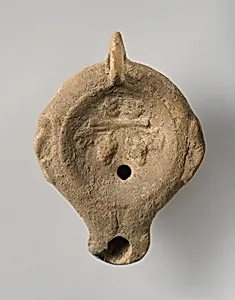
This humble earthenware lamp, crafted an unknown artist between the2nd and 6th centuries, offers a glimpse into the daily life of Late Antiquity in regions that would later flourish under Islamic culture. Classified as ceramics and housed in the Metropolitan Museum of Art's Islamic Art department, it reflects the practical artistry of early Mediterranean and Near Eastern workshops. Lamps like this were indispensable for illumination, typically filled with oil and fitted with a wick, bridging the gap between utilitarian function and subtle aesthetic appeal. Earthenware, made from fired clay, was a durable and accessible medium prized for its affordability and moldability. Artisans shaped these vessels on wheels or in molds, often leaving them unglazed for a rustic texture that suited everyday use. Though simple, such objects underscore the cultural continuity in ceramic traditions, evolving from pre-Islamic eras into the ornate pottery of the Islamic Golden Age. A generous bequest from the Edward C. Moore Collection in 1891 brings this artifact to life today, reminding us how ordinary items illuminate the ingenuity of ancient makers. Visitors, imagine its soft glow in a dimly lit home— a quiet testament to human resilience and creativity.