
Lamp
Unknown Artist
13th–14th century
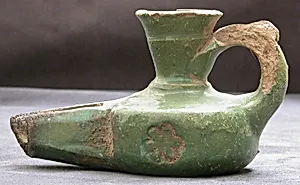
Medium
Earthenware; glazed, impressed
Dimensions
H. 2 5/8 in. (6.7 cm)
Classification
Ceramics
Department
Islamic Art
Museum
Metropolitan Museum of Art, New York, NY
Credit
Gift of Herbert E. Winlock, 1941
Accession Number
41.23.9
Rights
Public Domain
Art Historical Context
This delicate earthenware lamp, crafted by an unknown artist in the 13th–14th century, exemplifies the refined ceramics of the Islamic world. Standing just 2 5/8 inches (6.7 cm) tall, it was likely used for oil burning in homes, mosques, or tombs, providing soft illumination during an era when light symbolized divine guidance in Islamic culture. Its petite scale and functional design highlight the everyday artistry of medieval potters, blending utility with subtle beauty. The lamp's medium—glazed earthenware with impressed decoration—reveals sophisticated techniques. Artisans pressed motifs into the soft clay before firing and glazing, creating textured patterns that catch the light and enhance durability. This method, prevalent in regions like Persia, Syria, or Egypt under Mamluk or Ilkhanid rule, allowed for intricate, affordable ornamentation without costly paints or gilding. Glazing not only sealed the surface for hygiene but also produced a luminous sheen, evoking lusterware traditions. Housed in the Metropolitan Museum of Art's Islamic Art Department (gift of Herbert E. Winlock, 1941), this lamp offers a window into a vibrant ceramic heritage, where humble objects carried profound cultural weight. Visitors can appreciate how such pieces illuminated both literal spaces and the ingenuity of Islamic artisans.