
Landscape
Albert Pinkham Ryder, 1897–98 (?)
About this artwork
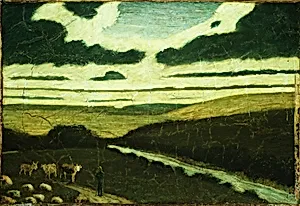
Albert Pinkham Ryder's *Landscape* (ca. 1897–98), a compact oil on canvas measuring just 9½ × 14 inches, captures the artist's signature poetic vision of the American countryside. Featuring cows grazing amid rolling hills and distant figures of men, this intimate scene evokes a timeless rural serenity, blending everyday pastoral elements with a mystical aura. Housed in The Metropolitan Museum of Art's American Wing, it reflects Ryder's late-career fascination with nature's quiet drama, gifted to the museum in 1952 by Frederick Kuhne. Ryder, a reclusive New York artist active in the late 19th century, was a key figure in American Symbolism and Tonalism, diverging from the brighter Impressionism of his peers. His small-scale works like this one often feature thick, impastoed layers of paint applied over years, building luminous, dreamlike atmospheres that suggest deeper spiritual resonances. The uncertain dating underscores Ryder's meticulous, obsessive process—he frequently revisited canvases, layering glazes to achieve ethereal effects. This painting exemplifies the shift in American art toward introspective landscapes, prioritizing mood over precise realism. Its modest size invites close contemplation, revealing Ryder's masterful handling of light and form, making it a gem for visitors exploring the soulful side of Gilded Age creativity.