
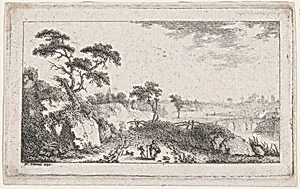
Landscape
Medium
Etching
Dimensions
Sheet (trimmed): 2 15/16 × 4 5/8 in. (7.5 × 11.8 cm)
Classification
Prints
Department
Drawings and Prints
Museum
Metropolitan Museum of Art, New York, NY
Credit
The Elisha Whittelsey Collection, The Elisha Whittelsey Fund, 1960
Accession Number
60.622.4(4)
Rights
Public Domain
Tags
Art Historical Context
In the late 18th century, artist Pierre Nicholas Camus crafted this intimate etching titled *Landscape* in 1780, capturing the serene beauty of nature during the Enlightenment era. Measuring just 2 15/16 × 4 5/8 inches (7.5 × 11.8 cm), its trimmed sheet reflects the compact format popular for print collectors, allowing detailed vistas to fit into personal albums or portfolios. Housed in the Metropolitan Museum of Art's Drawings and Prints department as part of The Elisha Whittelsey Collection (acquired via the Elisha Whittelsey Fund in 1960), it exemplifies the era's fascination with pastoral scenes amid France's pre-Revolutionary cultural shifts. Etching, Camus's chosen medium, involved coating a copper plate with an acid-resistant ground, scratching lines through it, and immersing the plate in acid to "bite" the grooves—creating rich, tonal depth ideal for evoking atmospheric landscapes. This intaglio technique democratized art, producing multiples from a single plate for wider audiences beyond oil paintings. Though specifics of the scene remain evocative rather than documented, its tag as a "landscape" highlights 18th-century Romantic precursors, blending observation with artistic imagination. Visitors will appreciate how this modest print bridges fine art and everyday appreciation, offering a window into Camus's precise draftsmanship and the tactile allure of historical printmaking.