
Landscape
1839
Medium
Etching
Dimensions
Sheet: 13 13/16 × 11 1/8 in. (35.1 × 28.3 cm) Plate: 7 1/4 × 5 3/8 in. (18.4 × 13.7 cm)
Classification
Prints
Department
Drawings and Prints
Museum
Metropolitan Museum of Art, New York, NY
Credit
Harris Brisbane Dick Fund, 1947
Accession Number
47.100.694
Rights
Public Domain
Tags
Art Historical Context
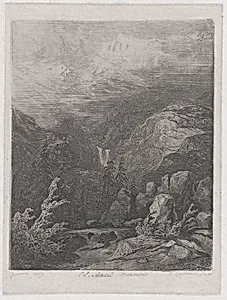
Alexandre Calame, a leading Swiss Romantic artist (1810–1864), was renowned for his dramatic depictions of the Alps and majestic landscapes, blending meticulous detail with the sublime power of nature. Created in 1839, this etching titled *Landscape* captures the essence of his style during a period when Romanticism celebrated nature's grandeur as a counterpoint to industrialization. Calame's works often drew from his travels through Switzerland and Italy, influencing later landscape painters like those of the Düsseldorf School. As an etching, the work showcases Calame's mastery of intaglio printmaking: acid etched lines on a copper plate allowed for intricate textures—think rugged peaks, misty valleys, and luminous skies—reproduced in fine detail within the modest plate size of 7¼ × 5⅜ inches. Etchings like this were vital in the 19th century for making high-quality art accessible beyond original paintings, bridging elite patronage and broader audiences. Housed in the Metropolitan Museum of Art's Drawings and Prints department (acquired via the Harris Brisbane Dick Fund in 1947), this piece exemplifies Calame's technical prowess and enduring appeal. Visitors will appreciate how it evokes the Romantic awe of untamed wilderness, inviting contemplation of humanity's place amid nature's majesty.
About the Artist
Alexandre Calame · 1810–1864
Comment on works: Landscapes