
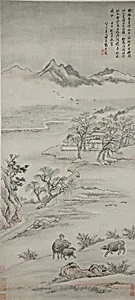
清 楊晉 滄洲牧牛圖 軸|Landscape with Figures
Dated 1726
Medium
Hanging scroll; ink and color on paper
Dimensions
Image: 47 x 21 1/2 in. (119.4 x 54.6 cm) Overall with mounting: 92 1/8 x 28 1/8 in. (234 x 71.4 cm) Overall with knobs: 92 1/8 x 31 7/8 in. (234 x 81 cm)
Classification
Paintings
Culture & Period
China · Qing dynasty (1644–1911)
Department
Asian Art
Museum
Metropolitan Museum of Art, New York, NY
Credit
Gift of Mr. and Mrs. Earl Morse, 1972
Accession Number
1972.278.7
Rights
Public Domain
Tags
Art Historical Context
In the tranquil world of Qing dynasty (1644–1911) painting, Yang Jin's *Cangzhou Pasturing C* (1726) unfolds as a masterful hanging scroll in ink and color on paper. nearly four feet tall, this vertical composition invites viewers to unroll it slowly, revealing a poetic landscape alive with mountains, expansive vistas, and figures tending cattle. Created during the early 18th century under Emperor Yongzheng's reign, it exemplifies the era's blend of orthodox Chinese painting traditions with subtle literati influences, where nature's grandeur reflects inner harmony. The scene centers on the timeless pastoral motif of herding oxen amid rugged peaks and open plains, evoking Cangzhou—a region symbolizing rustic simplicity. Yang Jin employs delicate ink washes for misty atmospheres and vibrant colors to highlight animals and human activity, creating depth and serenity. Such techniques underscore the cultural reverence for rural life as an ideal escape from urban bustle, a theme resonant in Chinese art since the Song dynasty. Displayed in the Metropolitan Museum of Art as a 1972 gift from Mr. and Mrs. Earl Morse, this scroll reminds us of hanging paintings' intimate role in scholarly studios—meant for contemplation rather than constant display. A window into Qing aesthetics, it celebrates humanity's quiet bond with the natural world.