
Landschap met ruïne
1603 - 1641
Medium
pen
Dimensions
150; 303
Rights
Public Domain
About this artwork
height 150 mm x width 303 mm
Art Historical Context
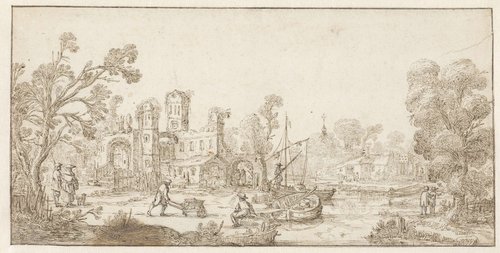
**Landschap met ruïneLandscape with Ruin)** Jan van de VeldeII) is a delicate pen drawing from the Dutch Golden Age, created sometime between 1603 and 1641, the active period of this prolific artist. Measuring a compact 150 mm high by 303 mm wide, it captures a panoramic vista featuring architectural ruins amid a natural setting—a motif that reflected the era's fascination with the passage of time and the harmony between man-made decay and enduring landscapes. Van de Velde (II), a skilled draughtsman and engraver from Haarlem, was instrumental in advancing landscape art in the Netherlands. Working in pen—likely brown ink on paper—he employed precise, fluid lines to evoke depth and texture, techniques honed through his training under his father, also an engraver. This intimate format suggests it may have served as a study for prints or personal sketch, showcasing the meticulous draftsmanship that influenced later masters like Rembrandt. The artwork's cultural resonance lies in its embodiment of early 17th-century Dutch humanism: ruins symbolize vanitas, reminding viewers of impermanence, while the expansive view celebrates the Low Countries' flat terrains and waterways. A gem for enthusiasts, it invites contemplation of nature's quiet triumph over human endeavors.