
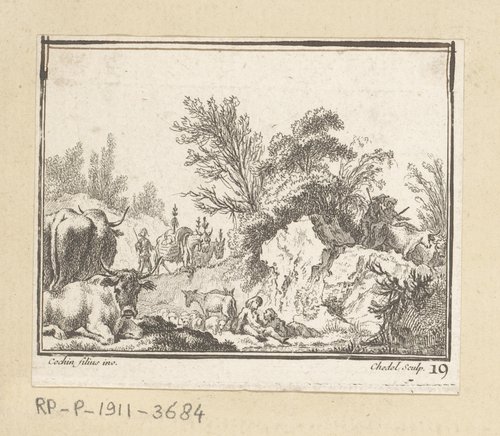
Landschap met rustende herders met kudde
1725 - 1763
Medium
etching
Dimensions
83; 68
Rights
Public Domain
About this artwork
blad: hoogte 68 mm (binnen plaatrand afgesneden) x breedte 83 mm (binnen plaatrand afgesneden)
Art Historical Context
In the intimate etching *Landschap met rust herders met kudde (Landscape with Resting Shepherds and Flock), by Pierre Quentin Chedel 1725 and 1763, visitors are invited into a serene pastoral scene. This small-scale work, measuring just 68 mm high by 83 mm wide (med within the plate mark), captures shepherds pausing amid their flock in a tranquil rural landscape—a motif evoking the timeless idyll of country life. Chedel, a lesser-known 18th-century etcher, draws on the enduring European fascination with nature's gentle rhythms during the Rococo era, when such vignettes offered an escape from urban bustle. Etching, Chedel's chosen medium, exemplifies the precision of intaglio printmaking: acid etches intricate lines into a metal plate, allowing for richly textured details like the shepherds' flowing robes and the sheep's woolly forms. This technique made fine art accessible beyond paintings, popular among collectors who prized these pocket-sized gems for albums or studies. Produced in the mid-1700s, the print reflects a shift toward lighter, more decorative landscapes post-Baroque, blending Dutch realism with French elegance. Though compact, this piece rewards close inspection, its delicate lines whispering stories of leisure and harmony. A charming window into 18th-century artistic ingenuity, it reminds us how printmakers like Chedel democratized beauty for everyday appreciation.
About the Artist
Pierre Quentin Chedel · 1705–1762
Comment on works: Engraver; Printmaker