
Lantern (one of a pair)
Unknown Artist
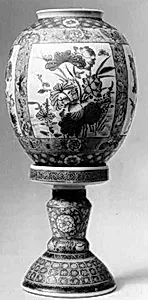
Medium
Porcelain painted in famille verte enamels
Dimensions
H. (with pedestal) 11 1/8 in. (28.3 cm)
Classification
Ceramics
Culture & Period
China · Qing dynasty (1644–1911), Yongzheng period (1723–35)
Department
Asian Art
Museum
Metropolitan Museum of Art, New York, NY
Credit
Bequest of Edward G. Kennedy, 1932
Accession Number
33.40.72a, b
Rights
Public Domain
Tags
Art Historical Context
This exquisite porcelain lantern, one of a pair, hails from China's Qing dynasty during the Yongzheng period (1723–35), a golden era for imperial porcelain production at Jingdezhen kilns. Standing 11 1/8 inches tall with its pedestal, it exemplifies the refined craftsmanship of the time, when emperors commissioned pieces blending functionality with artistry. Lanterns like this were often used in festivals, gardens, or palaces, illuminating celebrations such as the Lantern Festival and symbolizing prosperity and joy. Crafted in famille verte enamels—vibrant overglaze colors dominated by rich greens, accented with yellows, reds, and blues—the lantern features delicate floral motifs, a hallmark of Qing decorative porcelain. This technique, fired at lower temperatures after glazing, allowed for intricate painting that captured the lush beauty of peonies, lotuses, or prunus blossoms, evoking nature's harmony. Yongzheng wares are celebrated for their elegance and balance, bridging the bold Kangxi styles with the softer pastels of later reigns. Bequeathed to the Metropolitan Museum of Art in 1932 by Edward G. Kennedy, this lantern offers a glimpse into imperial China's cultural splendor, where ceramics were not just vessels but emblems of sophistication and imperial taste. Visitors, imagine its gentle glow casting floral shadows during a moonlit banquet!