
Lappet
Unknown Artist
early 18th century
Medium
Bobbin lace
Dimensions
L. 23 1/4 x W. 3 3/4 inches (59.1 x 9.5 cm)
Classification
Textiles-Laces
Culture
French
Department
European Sculpture and Decorative Arts
Museum
Metropolitan Museum of Art, New York, NY
Credit
Gift of Mrs. E. H. Simmons, 1935
Accession Number
35.39.1
Rights
Public Domain
Art Historical Context
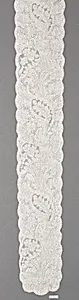
This exquisite *Lappet*, crafted in early 18th-century France, exemplifies the pinnacle of bobbin lace artistry from a golden age of European decorative arts. Measuring 23¼ x 3¾ inches, this delicate textile strip—likely intended as a decorative flap for garments like clerical robes or fashionable women's attire—showcases the intricate patterns achieved through bobbin lace techniques. Produced anonymously by skilled artisans, it reflects the era's demand for opulent lace in French courts and high society, where such pieces symbolized wealth and refinement. Bobbin lace, a labor-intensive method involving dozens of bobbins to braid and twist fine linen or silk threads over a pillow-patterned support, allowed for complex motifs like florals, scrolls, and picots (tiny loops). French centers like Alençon and Valenciennes were renowned for this medium, blending technical precision with artistic elegance. Unlike needle lace, bobbin lace's structured braiding created durable yet airy designs, making it ideal for trims on dresses, veils, and furnishings. Housed in the Metropolitan Museum of Art's European Sculpture and Decorative Arts Department since a 1935 gift from Mrs. E. H. Simmons, this lappet invites us to appreciate the unseen hands behind 18th-century luxury. It whispers of a time when lace was not just fabric, but a canvas for cultural splendor.