
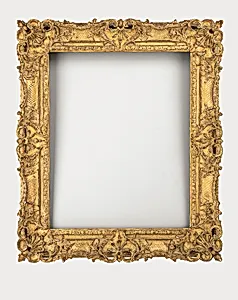
Largillière frame
Unknown Artist
1725–30
Medium
Oak lower moldings and feather keys; lime upper moldings.
Dimensions
Overall: 41 15/16 × 35 7/16 in. (106.5 × 90 cm) Sight: 31 1/2 × 25 3/16 in. (80 × 64 cm) Rabbet: 32 7/8 × 26 3/8 in. (83.5 × 67 cm)
Classification
Frames
Culture
French
Department
Robert Lehman Collection
Museum
Metropolitan Museum of Art, New York, NY
Credit
Robert Lehman Collection, 1975
Accession Number
1975.1.2253
Rights
Public Domain
Art Historical Context
Step into the opulent world of 18th-century French decorative arts with the *Largillière frame a masterful example from 1725–30 now in the Metropolitan Museum of Art's Robert Collection. Crafted by an unknown artist, frame exemplifies the exquisite woodworking traditions of Regency France, a bridging the grandeur of Louis XIV's era and the playful elegance of the Rococo. Measuring 41 15/16 × 35 7/16 inches overall, it was designed to encase a portrait-sized painting (sight size: 31 1/2 × 25 3/16 inches), highlighting its role in elevating aristocratic likenesses. The frame's construction reveals sophisticated techniques: sturdy oak forms the lower moldings and feather keys for durability and secure panel fitting, while lighter lime wood shapes the upper moldings, ideal for intricate carving. This strategic use of materials underscores French frame-makers' expertise in balancing strength, weight, and ornamentation, often tailored to complement paintings by artists like Nicolas de Largillière, the Baroque portraitist after whom it's named. Such frames were status symbols, transforming canvases into architectural jewels for grand salons. Acquired for the Robert Lehman Collection in 1975, this piece offers a rare glimpse into the unsung craft of gilding and framing that framed France's Golden Age of portraiture, inviting us to appreciate the frame not as mere support, but as an artwork in its own right.