
Lay Aristocrat's Robe (Chuba)
Unknown Artist
18th–19th century
Medium
Silk, wrapped gold
Dimensions
Overall: 51 x 78 in. (129.5 x 198.1 cm)
Classification
Textiles-Costumes
Culture
Tibet
Department
Asian Art
Museum
Metropolitan Museum of Art, New York, NY
Credit
Seymour Fund, 1982
Accession Number
1982.211
Rights
Public Domain
Tags
Art Historical Context
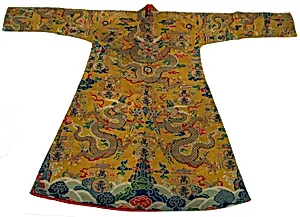
Step into the opulent world of 18th–19th century Tibet with this stunning Lay Aristocrat's Robe, known as a *chuba*. Crafted for non-monastic nobility, this garment from the Metropolitan Museum of Art Asian Art collection exemplifies the lavish attire of Tibet's elite lay aristocrats. Measuring an impressive 51 x 78 inches, it was designed to drape elegantly over the body, signaling wealth and high social standing in a society where clothing reflected hierarchy and cultural prestige. Luxuriously made of silk adorned with wrapped gold threads, the robe showcases exquisite textile techniques that highlight Tibetan mastery in weaving and embellishment. The gold wrapping—fine gold wire coiled around silk cores—creates a shimmering, metallic brocade effect, evoking imperial splendor. Prominent dragon motifs, symbols of power, protection, and imperial authority in Tibetan iconography, weave through the fabric, underscoring the wearer's noble status and connection to auspicious forces. Acquired through the Seymour Fund in 1982, this rare survivor offers a window into Tibet's aristocratic past, where such robes were reserved for ceremonies and daily displays of refinement. Its preservation celebrates the artistry of anonymous Tibetan craftsmen, blending functionality with profound cultural symbolism.