
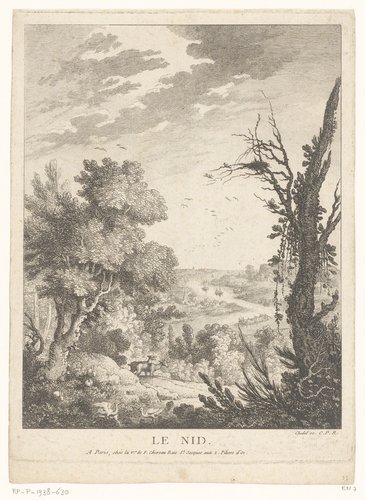
Le Nid
c. 1753 - c. 1782
Medium
etching
Dimensions
260; 198
Rights
Public Domain
About this artwork
collector's mark: Lugt 2760
Art Historical Context
**Le Nid (The Nest)** *Pierre-Quentin Chel, c. 1753–c. 1782, etching, 260 × 198 mm* Step into the delicate world of 18th French printmaking with *Le Nid* ("The Nest"), an etching Pierre-Quentin Chéd, a skilled engraver active during the Rococo era's transition to Neoclassicism. Created sometime between the 1750s and 1780s, this intimate work exemplifies etching's fluid technique: acid biting into a copper plate to render fine, spontaneous lines that capture texture and light with remarkable sensitivity. Chédel's style often drew from nature and pastoral themes, making "The Nest" a likely evocation of serene wildlife or domestic bird life, inviting viewers to ponder the quiet poetry of the natural world. The artwork bears a collector's mark (Lugt 2760), signaling its esteemed provenance—possibly linked to a prestigious European library or archive, a testament to its enduring appeal among connoisseurs. At roughly 10 by 8 inches, this modest sheet punches above its size, showcasing how etchings democratized art in pre-Revolutionary France. Affordable yet artistic, such prints adorned bourgeois homes, bridging elite painting traditions with everyday appreciation. Discover the nest's hidden wonders and Chédel's masterful linework, a window into Enlightenment-era fascination with nature's intricacies.
About the Artist
Pierre Quentin Chedel · 1705–1762
Comment on works: Engraver; Printmaker