
Le roi d'Ethiopie
1726 to 1750
Medium
etching and engraving
Classification
Department
CG-E
Museum
National Gallery of Art, Washington, D.C.
Credit
Widener Collection
Accession Number
1942.9.2439
Rights
Public Domain
Art Historical Context
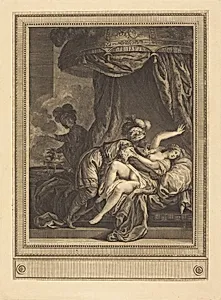
**Le roi d'Ethiopie** (*The King of Ethiopia*), created between 1726 and 1750, is a striking print by French engraver Gérard Vidal after a design by artist Charles Monnet. Housed in the National Gallery of Art's Widener Collection (Department CG-E), this work exemplifies the reproductive printmaking tradition of the early 18th century, when detailed engravings allowed images from paintings or drawings to reach wider audiences across Europe. The title evokes European fascination with distant lands during the Age of Exploration, portraying an exotic royal figure amid France's Rococo era—a time of ornate elegance and curiosity about non-Western cultures. Monnet, known for his theatrical scenes and portraits, likely provided a dynamic composition that Vidal translated into intricate lines, reflecting the era's blend of historical imagination and imperial intrigue. Crafted through etching and engraving, techniques that combined acid-etched textures with meticulously incised details, the print showcases the precision of copperplate printing. This medium was revolutionary for its time, enabling high-quality multiples that democratized art while preserving delicate nuances of costume and expression. A captivating window into 18th-century visual storytelling, it invites visitors to ponder cross-cultural encounters through elegant craftsmanship. (198 words)