
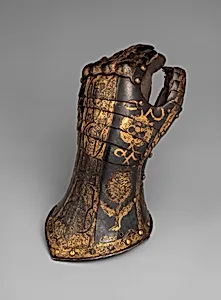
Left Gauntlet of Henry (1594–1612), Prince of Wales
ca. 1608
Medium
Steel, gold, leather, textile
Dimensions
H. 9 15/16 in. (25.3 cm); W. 4 15/16 in. (12.6 cm); D. 5 5/16 in. (13.5 cm); Wt. 1 lb. 10.05 oz. (738 g) as mounted with mannequin hand
Classification
Armor Parts-Gauntlets
Culture
British, Greenwich
Department
Arms and Armor
Museum
Metropolitan Museum of Art, New York, NY
Credit
Munsey Fund, 1932
Accession Number
32.130.6k
Rights
Public Domain
Art Historical Context
This exquisite left gauntlet, crafted around 1608 by master armorer Jacob Halder at the Royal Almain Armoury in Greenwich, England, once protected the hand of Henry Frederick, Prince of Wales (1594–1612), the beloved eldest son of King James I As heir to the throne, Henry embodied the Renaissance ideal of the warrior-prince, and his armor was designed more for dazzling display in tournaments and courtly pageantry than battlefield combat. Greenwich workshops, under royal patronage since Henry VIII's time, were renowned for producing such opulent pieces, blending English craftsmanship with continental influences. Forged from steel and embellished with gold, leather, and textile elements, the gauntlet measures about 10 inches high and weighs just over 1.5 pounds—light yet robust for agile movement. Halder's techniques highlight the armorer's artistry: meticulously polished plates articulate seamlessly at the fingers and wrist, with intricate gilding evoking chivalric splendor. This surviving fragment underscores the era's fusion of function and finery, reflecting Jacobean England's cultural prestige. Though Henry died tragically young at 18, likely from typhoid, his armor endures as a poignant relic of unfulfilled promise, captivating visitors with its tactile elegance and royal legacy. (198 words)