
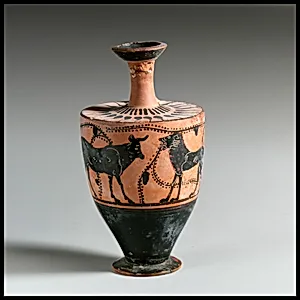
Lekythos
early 5th century BCE
Medium
Terracotta
Dimensions
H. 4 9/16 in. (11.5 cm)
Classification
Vases
Culture & Period
Greek, Attic · Late Archaic
Department
Greek and Roman Art
Museum
Metropolitan Museum of Art, New York, NY
Credit
Rogers Fund, 1941
Accession Number
41.162.181
Rights
Public Domain
Tags
Art Historical Context
This delicate terracotta lekythos, created by the Little Lion Class in early 5th-century BCEic Greece, exemplifies the Late Archaic period's refined black-figure pottery tradition. Standing just 4 9/16 inches (11.5 cm) tall, these small vases were masterfully wheel-thrown and fired, with artisans incising details into the glossy black slip before adding reddish clay accents. The Little Lion Class, a of anonymous painters named for their signature diminutive lion motifs, specialized in such intimate vessels, bridging the Archaic and emerging Classical styles. Adorned with dynamic scenes of lions and bulls—fierce symbols of power and the wild—the lekythos likely served as an oil or perfume flask, commonly offered at graves in ancient Athenian cemeteries. Its compact size and vivid animal imagery reflect the period's fascination with mythology and nature, while the precise black-figure technique highlights the skill of Attic potters at a time when red-figure was gaining prominence. Housed in the Metropolitan Museum of Art's Greek and Roman Art Department (Rogers Fund, 1941), this piece offers a window into everyday rituals and artistic innovation, reminding us of Greece's enduring legacy in ceramics.