
Lekythos
Unknown Artist
ca. 500–480 BCE
Medium
Terracotta
Dimensions
H. 16.59 cm.
Classification
Vases
Culture & Period
Greek, Attic · Late Archaic
Department
Greek and Roman Art
Museum
Metropolitan Museum of Art, New York, NY
Credit
Gift of Mrs. James E. Marcuse, 1980
Accession Number
1980.536.2
Rights
Public Domain
Tags
Art Historical Context
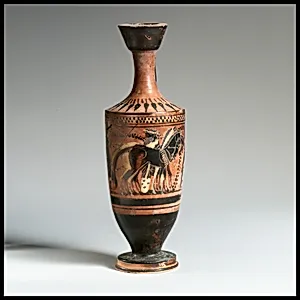
This delicate Attic lekythos, crafted around 500–480 BCE during the Late Archaic period exemplifies the refined pottery of ancient Greece. Standing just 16.59 cm tall, these slender terracotta vases were designed to hold oils or perfumes, often used inary rituals to anoint the deceased. Produced in Athens, the cultural heart of the Greek world, such vessels served both practical and ceremonial purposes, bridging daily life with the divine. Adorned with scenes of a goddess accompanied by chariots and horses—evoking powerful mythological narratives like those of Athena or Artemis—the lekythos captures the era's fascination with heroic and divine motion. Painted in the characteristic black-figure technique transitioning toward red-figure, the artwork highlights Attic artists' mastery of silhouette forms, incision, and added details in purple and white, bringing myths to life on everyday objects. Housed in the Metropolitan Museum of Art's Greek and Roman Art Department (gift of Mrs. James E. Marcuse, 1980), this piece offers a window into Archaic Greece's religious devotion and artistic innovation, reminding us how pottery preserved stories for eternity.