
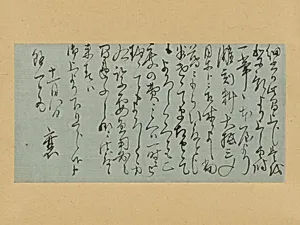
頼山陽筆 書状|Letter
ca. 1820–28
Medium
Hanging scroll; ink on paper
Dimensions
Image: 6 1/8 × 12 in. (15.6 × 30.5 cm) Overall with mounting: 42 5/8 × 15 3/16 in. (108.3 × 38.6 cm)
Classification
Calligraphy
Culture & Period
Japan · Edo period (1615–1868)
Department
Asian Art
Museum
Metropolitan Museum of Art, New York, NY
Credit
Mary and Cheney Cowles Collection, Gift of Mary and Cheney Cowles, 2022
Accession Number
2022.432.20
Rights
Public Domain
Art Historical Context
This exquisite hanging scroll, titled *Letter* and penned by the renowned Japanese scholar Rai San’yō around 1820–28, showcases the artistry of Edo-period (1615–1868) calligraphy. Crafted in ink on paper, the compact image measures just 6 1/8 × 12 inches, yet its elegant mounting extends to over 42 inches, inviting viewers to unroll and savor it in traditional fashion. Rai San’yō1780–1832), a Confucian historian and poet celebrated for his seminal work *Nihon Gaishi* (Unofficial History of Japan), blended scholarly depth with bold calligraphic flair, drawing from classical Chinese models while infusing a distinctly Japanese vitality. In Edo Japan, calligraphy was more than script—it was a profound expression of character and cultivation, often shared as personal letters among intellectuals. San’yō’s fluid, dynamic brushstrokes exemplify *shō* (calligraphy)’s emphasis on rhythm, balance, and emotional resonance, where each stroke reveals the artist’s spirit. Hanging scrolls like this were prized for home altars or seasonal displays, transforming intimate correspondence into a meditative art object. From the Mary and Cheney Cowles Collection at The Metropolitan Museum of Art, this piece offers a window into the refined literati culture of late feudal Japan, where words danced as vividly as paintings.