
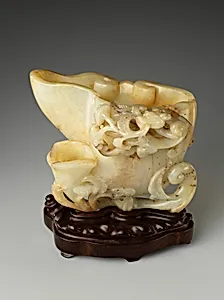
晚明 玉雕靈芝杯|Libation cup with magic fungus (lingzhi)
Unknown Artist
17th century
Medium
Jade (nephrite)
Dimensions
H. 3 5/8 in. (9.2 cm)
Classification
Jade
Culture & Period
China · Ming dynasty (1368–1644)
Department
Asian Art
Museum
Metropolitan Museum of Art, New York, NY
Credit
Gift of Florence and Herbert Irving, 2015
Accession Number
2015.500.5.29
Rights
Public Domain
Art Historical Context
This exquisite jade libation cup, carved from nephrite in the late Ming dynasty (17th century), embodies the pinnacle of Chinese jade artistry during a golden age of craftsmanship. Standing just 3 5/8 inches (9.2 cm) tall, its delicate form mimics the sacred lingzhi fungus, a motif revered in Chinese culture for symbolizing immortality, longevity, and spiritual enlightenment. Produced during the waning years of the Ming period (1368–1644), when imperial workshops flourished, such cups were prized possessions of scholars and elites, used in ritual wine offerings or as scholarly tableware. Nephrite jade, prized for its toughness and luminous translucency, allowed artisans to achieve intricate hollowing and naturalistic details, transforming a simple vessel into a sculptural marvel. The unknown carver's mastery is evident in the organic curves and subtle veining that evoke the fungus's mythical vitality, reflecting Daoist ideals of harmony with nature. This piece, a gift to the Metropolitan Museum of Art from Florence and Herbert Irving in 2015, highlights the technical innovation of late Ming jade work, where raw stone's imperfections were artfully integrated into the design. In the Asian Art galleries, it invites visitors to ponder the enduring allure of jade in Chinese aesthetics—more than a material, it's a bridge to the cosmos.