
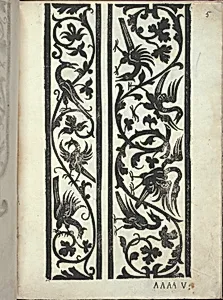
Libro quarto. De rechami per elquale se impara in diuersi modi lordine e il modo de recamare...Opera noua, page 5 (recto)
ca. 1532
Medium
Woodcut
Dimensions
Overall: 8 3/8 x 5 7/8 x 3/16 in. (21.2 x 14.9 x 0.5 cm)
Classification
Books|Prints|Ornament & Architecture
Department
Drawings and Prints
Museum
Metropolitan Museum of Art, New York, NY
Credit
Harris Brisbane Dick Fund, 1948
Accession Number
48.40(7)
Rights
Public Domain
Tags
Art Historical Context
Step into the intricate world of Renaissance design with this woodcut from Alessandro Paganino's *Libro quarto. De rech per elquale separa in diuersi lordine e il modo recamare...Operaa*, page 5 (recto), around 1532 in Venice. Paganino, a prolific printer, specialized in pattern books that democratized ornamental motifs for artisans across Europe. This modest page, measuring just 8 3/8 x 5 7/8 inches, bursts with elegant vines entwined with birds—classic motifs symbolizing nature's harmony and abundance. These woodcuts were revolutionary tools for embroidery enthusiasts, lace makers, and other craftspeople, offering precise, repeatable templates in bold black lines carved into wood blocks. Printed on thin paper, they could be easily transferred or referenced, fueling the explosion of decorative arts during the Italian Renaissance. Paganino's *Opera noua* (new work) reflects Venice's vibrant print culture, where innovation met tradition to inspire everything from sumptuous textiles to architectural embellishments. Held in the Metropolitan Museum of Art's Drawings and Prints department, this leaf captures a pivotal moment when printed patterns bridged elite workshops and everyday creators, leaving a lasting legacy in ornamental design. Imagine 16th-century needleworkers tracing these graceful birds and flourishing vines to adorn collars, altar cloths, or gowns!