
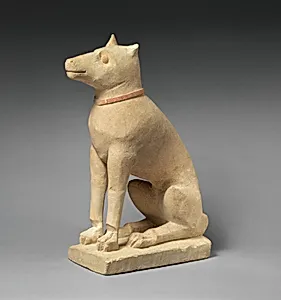
Limestone dog
Unknown Artist
ca. 4th–3rd century BCE
Medium
Limestone
Dimensions
WebPub GR 2012 Cesnola: 17 3/4 × 6 3/8 × 11 in., 42 lb. (45.1 × 16.2 × 27.9 cm, 19.1 kg)
Classification
Stone Sculpture
Culture & Period
Cypriot · Late Classical or Early Hellenistic
Department
Greek and Roman Art
Museum
Metropolitan Museum of Art, New York, NY
Credit
The Cesnola Collection, Purchased by subscription, 1874–76
Accession Number
74.51.2623
Rights
Public Domain
Tags
Art Historical Context
This delightful limestone sculpture of a dog, dating to around the 4th–3rd century BCE, captures spirited essence of a beloved animal from ancient Cyprus. Carved from a single block of limestone—a durable local material favored for its workability—the figure stands about 17¾ inches tall, embodying the Late Classical or Early Hellenistic period. Its compact form (17¾ × 6⅜ × 11 inches, weighing 42 pounds) suggests it may have served as a votive offering or guardian figure in a sanctuary, highlighting everyday companions in Cypriot life. Cypriot art during this era blended Greek, Near Eastern, and Egyptian influences, resulting in robust, naturalistic sculptures like this one. Dogs held cultural importance as hunters, protectors, and symbols of loyalty, often appearing in tomb reliefs or religious contexts across the ancient Mediterranean. The unknown artist's skillful carving—evident in the detailed musculature and alert posture—showcases techniques like subtraction and polishing, bridging the refined Classicism of Greece with the emerging dynamism of Hellenism. Acquired as part of the Cesnola Collection (purchased by subscription, 1874–76), this piece from the Metropolitan Museum of Art's Greek and Roman Art department offers a window into Cyprus's vibrant ancient world, where such animal figures bridged the divine and domestic. A perfect example of how everyday motifs gained artistic immortality!