
Limestone statue of Artemis Bendis
Unknown Artist
ca. 3rd century BCE
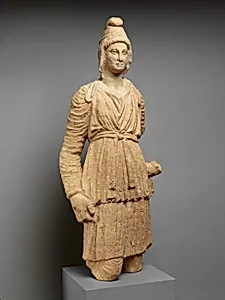
Medium
Hard limestone
Dimensions
WebPub GR 2012 Cesnola: 30 3/4 × 12 3/4 × 7 1/4 in., 53 lb. (78.1 × 32.4 × 18.4 cm, 24 kg)
Classification
Stone Sculpture
Culture & Period
Cypriot · Hellenistic
Department
Greek and Roman Art
Museum
Metropolitan Museum of Art, New York, NY
Credit
The Cesnola Collection, Purchased by subscription, 1874–76
Accession Number
74.51.2477
Rights
Public Domain
Tags
Art Historical Context
This striking limestone statue of Artemis Bendis, created around the 3rd century BCE in Cyprus, captures the rich cultural blending of the Hellenistic world. The figure merges the Greek goddess Artemis—protector of the hunt and wilderness—with Bendis, a Thracian deity associated with nature and the moon. Such syncretism was common as Greek influence spread across the eastern Mediterranean, reflecting how local Cypriot traditions absorbed and adapted foreign cults during this dynamic period. Carved from hard limestone, a material favored in Cypriot workshops for its durability and availability, the sculpture exemplifies the robust, expressive style of Hellenistic stone carving. Its compact yet powerful form, standing roughly 30 inches tall, suggests it may have served as a votive offering or temple adornment. Acquired as part of the renowned Cesnola Collection in the 1870s, this piece now offers visitors a tangible connection to the religious and artistic exchanges that shaped ancient Mediterranean societies.