
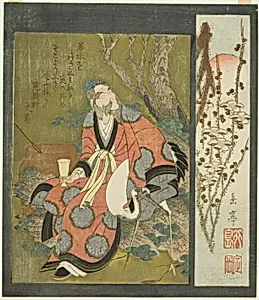
Lin Hejing (Rin Nasei) with Crane
19th century
Medium
Color woodblock print; shikishiban, surimono
Dimensions
22.1 × 19.3 cm (8 11/16 × 7 5/8 in.)
Classification
woodblock print
Department
Arts of Asia
Museum
Art Institute of Chicago
Accession Number
80927
Rights
Public Domain
Art Historical Context
Behold the serene elegance of *Lin Hejing (Rin Nasei) with Crane*, a 19th-century color woodblock print by Yashima Gakutei, a master of Japan's ukiyo-e tradition. Crafted in the intimate shikishiban surimono format—measuring just 22.1 × 19.3 cm—this square print was likely a luxurious private commission, often exchanged among poetry circles during New Year's celebrations. Gakutei's delicate lines and vibrant hues capture the legendary Chinese poet Lin Hejing (Lin Bu, 967–1028), a Song dynasty hermit who embodied reclusive purity, famously doting on his pet crane as a companion in his plum-blossom retreat. Surimono like this one highlight the pinnacle of woodblock printing artistry, where carvers and printers achieved extraordinary detail through multiple color blocks and mica dusting for a shimmering effect. Gakutei, active in Osaka's vibrant print scene, infused ukiyo-e's "pictures of the floating world" with poetic introspection, blending Japanese craftsmanship with Chinese literati ideals. Lin Hejing's image symbolizes harmony with nature and escape from worldly strife—a timeless appeal in Edo-period Japan amid rapid social change. Housed in the Art Institute of Chicago's Arts of Asia department, this gem invites us to pause and ponder the quiet wisdom of solitude, much like the poet himself gazing skyward with his graceful crane.
About the Artist
Yashima Gakutei · 1786–1868
Yashima Gakutei (c. 1786–1868), born in Osaka as the illegitimate son of a Tokugawa shogunate samurai named Hirata, adopted the name from his mother's subsequent marriage into the Yashima clan. Little is documented about his early years beyond these familial ties, but he pursued artistic training under the esteemed ukiyo-e masters Totoya Hokkei and Katsushika Hokusai, absorbing their precision in ...