
Linenfold Cupboard
Unknown Artist
15th century
Medium
oak
Dimensions
Overall: 76 x 67 in. (193 x 170.2 cm)
Classification
Woodwork-Furniture
Culture
French
Department
The Cloisters
Museum
Metropolitan Museum of Art, New York, NY
Credit
Gift of Mrs. Cheever Porter, in memory of her father, John D. Cheever, 1940
Accession Number
40.141
Rights
Public Domain
Art Historical Context
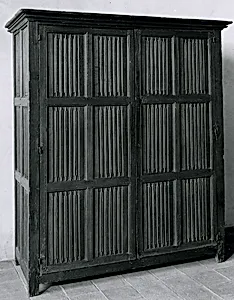
This striking linenfold cupboard, crafted in France during the 15th century, represents a fine example of late medieval furniture. Standing over six feet tall and made of solid oak, it was designed for practical storage while serving as an impressive display of craftsmanship. The Cloisters collection at The Metropolitan Museum of Art highlights such pieces to evoke the domestic and ecclesiastical settings of the Middle Ages. The cupboard’s most distinctive feature is its carved linenfold panels, a decorative technique that mimics the soft folds of draped fabric. This motif became popular across Northern Europe in the Gothic period, transforming functional furniture into works of subtle artistry. Skilled woodworkers used simple tools to create the illusion of pleated linen, adding texture and elegance without elaborate inlay or paint. Acquired by the museum in 1940 as a gift, the cupboard offers visitors a tangible connection to 15th-century French life. Its sturdy construction and refined detailing reflect both the era’s aesthetic preferences and the enduring value placed on well-made household objects.