
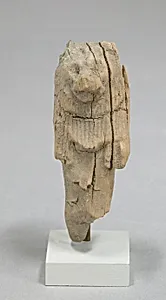
Lion
Unknown Artist
ca. 1700–1550 B.C.
Medium
Wood
Dimensions
h. 7.3 cm (2 7/8 in)
Classification
Figurine, Lion upright
Period
Second Intermediate Period
Department
Egyptian Art
Museum
Metropolitan Museum of Art, New York, NY
Credit
Rogers Fund, 1915
Accession Number
15.3.415
Rights
Public Domain
Tags
Art Historical Context
Nestled in the Metropolitan Museum of Art's Art collection, this petite wooden lion sculpture (h. 7.3 cm) captures the fierce spirit of ancient Egypt during the Second Intermediate Period, 1700–1550 B.C. Crafted from wood by an unknown artist in the late Dynasty 13 to early Dynasty 18, exemplifies the era's transitional artistry amid political fragmentation, when Theban rulers vied for power against northern invaders like the Hyks. Acquired through the Rogers Fund in 5, this rare survivor highlights the fragility and resilience of wooden artifacts from antiquity. Lions held profound symbolic power in Egyptian culture, embodying strength, protection, and royal ferocity—qualities linked to warrior goddesses like Sekhmet and pharaonic might. Carved in a compact, dynamic pose, this figurine likely served as an amulet, votive offering, or ritual object, invoking the beast's protective aura for its owner. The choice of wood, a perishable medium often coated in gesso and paint (now faded), underscores the technical skill of ancient sculptors who imbued everyday materials with divine potency. Though small, this lion roars with historical resonance, offering a glimpse into a turbulent time when such talismans bridged the human and sacred realms. A true treasure for Egyptophiles!