
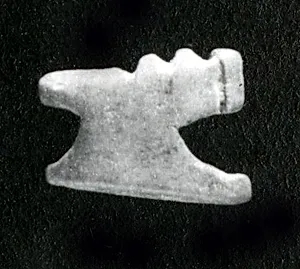
Lion amulet
Unknown Artist
ca. 2110–2030 B.C.
Medium
Ivory
Classification
Amulet, Lion
Period
Old Kingdom–First Intermediate Period
Department
Egyptian Art
Museum
Metropolitan Museum of Art, New York, NY
Credit
Rogers Fund, 1965
Accession Number
65.46.8
Rights
Public Domain
Tags
Art Historical Context
This exquisite **Lion Amulet**, carved from ivory around 2110–2030 B.C., hails from Egypt's Old Kingdom to First Intermediate Period (Dynasties 8–11). Crafted by an unknown artist, it exemplifies the masterful small-scale sculptures of the era, when political fragmentation followed the grandeur of pyramid-building pharaohs. Ivory, a prized material sourced from elephant tusks or hippopotamus teeth, was reserved for elite objects, highlighting the amulet's status as a personal talisman. Lions held profound symbolic power in ancient Egyptian culture, embodying strength, ferocity, and royal protection—qualities linked to solar deities and kingship. Worn as jewelry or placed in tombs, such amulets served apotropaic purposes, warding off evil and ensuring vitality in life or the afterlife. The intricate carving captures the lion's dynamic form, showcasing advanced techniques in piercing and detailing despite the object's modest size. Acquired through the Rogers Fund in 1965, this artifact from the Metropolitan Museum of Art's Egyptian collection offers a window into a turbulent yet resilient period, where everyday mysticism intertwined with monumental history. A testament to enduring artistry, it invites us to ponder the lion's roar echoing through millennia.