
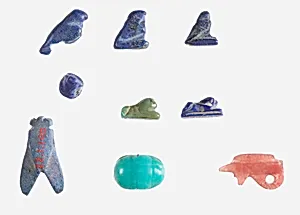
Lion amulet
Unknown Artist
ca. 1850–1700 B.C.
Medium
Green jasper
Dimensions
l. 0.9 cm (3/8 in)
Classification
Amulet, Lion
Period
Late Middle Kingdom
Department
Egyptian Art
Museum
Metropolitan Museum of Art, New York, NY
Credit
Rogers Fund and Edward S. Harkness Gift, 1922
Accession Number
22.1.135
Rights
Public Domain
Art Historical Context
This exquisite Lion amulet, carved from vibrant green jasper dates to the Late Middle Kingdom (ca. 1850–1700 B.C.), during the late 12th to 13th Dynasties. Measuring just 0.9 cm long—small enough to wear as a pendant or sew into clothing—it exemplifies the intricate artistry of ancient Egyptian jewelry. Crafted by an unknown artist, its compact form highlights the skill of ancient lapidaries who transformed hard semiprecious stones into potent talismans using simple tools like abrasives and drills. In Egyptian culture, lions embodied raw power, protection, and royal authority, often linked to fierce goddesses like Sekhmet. Amulets like this one were believed to safeguard the wearer from harm, evil spirits, or misfortune, serving both daily and funerary purposes. The choice of green jasper, a durable and symbolically vibrant material evoking renewal and vitality, enhanced its magical properties. Acquired through the Rogers Fund and Edward S. Harkness Gift in 1922, this piece now resides in the Metropolitan Museum of Art's Egyptian Art collection, offering a glimpse into the Middle Kingdom's blend of artistry and spirituality.