
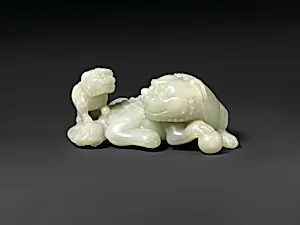
清中期 玉雕子母獅|Lion and cub
Unknown Artist
18th century
Medium
Jade (nephrite)
Dimensions
H. 3 11/16 in. (9.3 cm); W. 8 1/8 in. (20.7 cm); D. 5 3/16 in. (13.2 cm)
Classification
Jade
Culture & Period
China · Qing dynasty (1644–1911)
Department
Asian Art
Museum
Metropolitan Museum of Art, New York, NY
Credit
Gift of Heber R. Bishop, 1902
Accession Number
02.18.381
Rights
Public Domain
Tags
Art Historical Context
This exquisite nephrite jade carving depicts a lioness playfully nuzzling her cub, crafted during the mid-Qing dynasty in 18th-century China. Measuring just 3⅝ inches high but spanning over 8 inches wide, sculpture captures a tender moment of maternal affection amid the lioness's powerful form. Lions, often rendered as mythical guardian beasts in Chinese art, symbolized imperial power, protection, and good fortune—fierce yet benevolent sentinels against evil spirits. Jade carving reached unparalleled heights during the Qing era (1644–1911), when nephrite from Xinjiang mines was prized for its creamy white tone and translucency, evoking purity and immortality. Artisans employed masterful techniques like incising fine fur details, undercutting for dynamic poses, and polishing to a glassy sheen, transforming raw stone into lifelike vitality. This piece exemplifies the period's technical virtuosity and aesthetic refinement, favored by emperors and elites. Now housed in the Metropolitan Museum of Art's Asian Art Department as a 1902 gift from Heber R. Bishop, it invites visitors to marvel at China's enduring jade legacy—a timeless blend of artistry, symbolism, and natural beauty.