
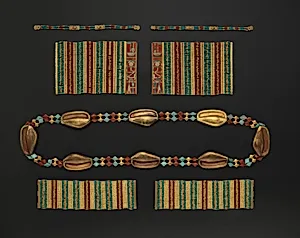
Lion Bracelet of Sithathoryunet
Unknown Artist
ca. 1887–1813 B.C.
Medium
Gold, carnelian, turquoise
Dimensions
l. 14.5 cm (5 11/16 in); l. of lions 1.4 cm (9/16 in); l. of clasp (0.8 cm (5/16 in)
Classification
Bracelet, Sithathoryunet, lion
Period
Middle Kingdom
Department
Egyptian Art
Museum
Metropolitan Museum of Art, New York, NY
Credit
Purchase, Rogers Fund and Henry Walters Gift, 1916
Accession Number
16.1.13
Rights
Public Domain
Art Historical Context
Step into the opulent world of Middle Kingdom Egypt with the *Lion Bracelet of Sithoryunet*, a exquisite from Dynasty 12 (ca. 1887–1813 B.C.). Crafted Sithathoryunet, likely a royal princess, this delicate gold bracelet embodies the era's artistic revival and prosperity, when pharaohs like Senusret III fostered refined craftsmanship and monumental achievements. Discovered in a tomb cache, it reflects the elite's pursuit of eternal beauty and protection in the afterlife. Fashioned from shimmering gold inlaid with vibrant carnelian and turquoise, the bracelet measures just 14.5 cm long, with tiny lion figures (1.4 cm) symbolizing strength and divine power—lions were sacred guardians in Egyptian lore. The intricate clasp (0.8 cm) showcases advanced metalworking techniques, such as granulation and cloisonné inlays, which secured semiprecious stones with precision. These materials weren't just decorative; gold evoked the sun god Ra's flesh, while carnelian and turquoise warded off evil, blending artistry with amuletic magic. Acquired by the Metropolitan Museum of Art in 1916 through the Rogers Fund and Henry Walters Gift, this treasure from the Egyptian Art department invites us to marvel at ancient ingenuity. A testament to royal splendor, it whispers of a time when jewelry was both adornment and legacy. (198 words)