
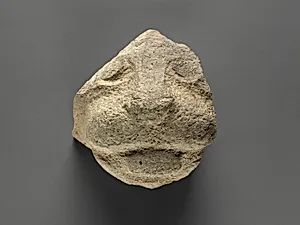
Lion head
Unknown Artist
ca. 2900–2350 BCE
Medium
Stone
Dimensions
6.14 x 5.04 x 3.07 in. (15.6 x 12.8 x 7.8 cm)
Classification
Stone-Sculpture
Culture & Period
Sumerian · Early Dynastic
Department
Ancient Near Eastern Art
Museum
Metropolitan Museum of Art, New York, NY
Credit
Rogers Fund, 1959
Accession Number
59.41.14
Rights
Public Domain
Tags
Art Historical Context
This intricately carved stone lion head, dating to the Sumerian Early Dynastic period (. 2900–2350 BCE), hails from one of the world's earliest urban civilizations in ancient Mesopotamia. Measuring just over 6 inches tall, this compact sculpture exemplifies the Sumerians' mastery of stone carving, likely fashioned from a durable local stone using basic chisels and abrasives. Discovered and acquired by the Metropolitan Museum of through the Rogers Fund in 9, it now resides in the Department of Ancient Near Eastern Art. Lions held profound symbolic power in Sumerian culture, often embodying ferocity, protection, and royal authority. Such heads might have adorned temple gateways, served as votive offerings to deities like Inanna, or functioned as architectural elements in city-states like Uruk or Lagash. The stylized features—piercing eyes, stylized mane, and alert expression—capture the animal's majestic intensity, reflecting the period's shift toward more naturalistic yet symbolic representations in art. Though the artist remains unknown, this piece highlights the technical skill of Early Dynastic sculptors, who transformed hard stone into lifelike guardians. Visitors can marvel at how these ancient works bridged the human and divine, offering a window into a society that laid the foundations of writing, law, and monumental architecture.