
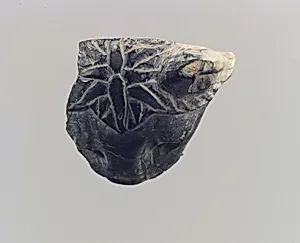
Lion head fragment
Unknown Artist
ca. 9th–7th century BCE
Medium
Ivory
Dimensions
0.79 x 0.75 in. (2.01 x 1.91 cm)
Classification
Ivory/Bone-Sculpture
Culture & Period
Assyrian · Neo-Assyrian
Department
Ancient Near Eastern Art
Museum
Metropolitan Museum of Art, New York, NY
Credit
Rogers Fund, 1957
Accession Number
57.27.14
Rights
Public Domain
Tags
Art Historical Context
Behold this exquisite *Lion Head Fragment*, a tiny yet ferocious ivory carving from the Neo-Assy period (ca. 9th–7th century BCE). just 0.79 x 0.75 inches, this delicate sculpture—likely part of a larger decorative inlay or furniture ornament—captures the snarling visage of a lion with remarkable precision. Crafted by an unknown Assyrian artist, it now resides in the Metropolitan Museum Art's Department of Ancient Near Eastern Art acquired through the Rogers Fund in 7. In Neo-Assyrian culture, embodied raw power, royal might, and divine protection, frequently appearing in palace reliefs, seals, and luxury goods to symbolize the empire's dominance. Ivory, a precious material often imported from Africa or India, was reserved for elite objects, showcasing the Assyrians' mastery of carving hard, brittle elephant tusk into intricate details like the lion's furrowed brow, bared fangs, and flowing mane. This fragment hints at the opulence of Assyrian courts, where such motifs adorned thrones and furniture for kings like Ashurnasirpal II. Though incomplete, its survival speaks to the enduring allure of Assyrian artistry, blending ferocity with finesse in a palm-sized marvel that once roared silently in a mighty palace.