
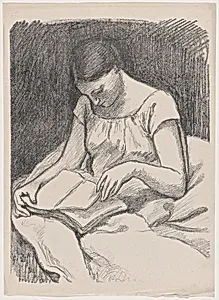
Liseuse (The Reader)
Medium
lithograph in black on china paper
Dimensions
sheet: 39.2 x 28.4 cm (15 7/16 x 11 3/16 in.)
Classification
Department
CG-E
Museum
National Gallery of Art, Washington, D.C.
Credit
Virginia and Ira Jackson Collection, gift in memory of Virginia H. Jackson
Accession Number
1996.151.60
Rights
Public Domain
Art Historical Context
**Liseuse (The)**, created by French artist Georges Daniel de Monid in 1895, invites visitors into a serene moment of quiet contemplation. This exquisite lithograph, printed in black ink on delicate china paper, measures 39.2 x 28.4 cm and captures the subtle grace of a woman immersed in reading. The choice of china paper—a thin, high-quality Asian import prized by 19th-century printmakersenhances the image's velvety textures and intricate details, allowing the ink to absorb deeply for a luminous effect. Monfreid, a multifaceted artist and close friend of Paul Gauguin, bridged Impressionism and Symbolism during the fin de siècle era. His prints often explored intimate, evocative scenes, reflecting the era's fascination with private reverie amid rapid modernization. Lithography, a planar printing technique invented in the late 18th century, gave Monfreid fluid control over tones and lines, making this work a testament to the medium's versatility in fine art reproduction. Housed in the National Gallery of Art's Prints department (CG-E) as part of the Virginia and Ira Jackson Collection—gifted in memory of Virginia H. Jackson—*Liseuse* embodies the cultural shift toward celebrating everyday poetry. It reminds us how a simple act like reading could symbolize deeper intellectual and emotional escape in belle époque France.