
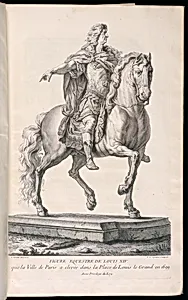
Livre d'architecture, contenant les principes généraux de cet art, et les plans, élévations et profils de quelques-uns des bâtimens faits en France et dans les pays étrangers, par le sieur Boffrand
Medium
Bound print
Classification
Bound print
Department
Smithsonian Collection
Museum
Smithsonian American Art Museum
Credit
Purchased for the Museum by the Advisory Council
Accession Number
1921-6-543-2
Rights
Public Domain
About this artwork
Research in Progress
Art Historical Context
**Livre d'architecture by Germain Boffrand** Step into the elegant world of 18th French architecture with Germain Brand's *Livre d'architecture* (1745), a masterful bound print that serves as both treatise and visual treasury. Boffrand (1667–1754), a leading architect of the late Baroque era and pupil of the grand Jules Hardouin-Mansart distilled his expertise into this volume. Its full title promises "general principles of this art, and the plans, elevations, and profiles of some of the buildings made in France and in foreign countries," offering readers a comprehensive guide to design that blended theoretical insight with practical examples from grand châteaux to international inspirations. Published at the height of the Rococo movement's refinement, the book captures a pivotal moment when architecture shifted toward lighter, more ornate forms while retaining classical rigor. Boffrand's engravings—precise and evocative—disseminated sophisticated designs to builders, scholars, and enthusiasts across Europe, influencing the spread of French taste amid the Enlightenment's emphasis on reason and beauty. Housed in the Smithsonian American Art Museum's collection (purchased by the Advisory Council), this rare volume underscores the transatlantic appeal of European architectural innovation. As a bound print, it exemplifies the era's etching and engraving techniques, which allowed intricate details to leap off the page with remarkable clarity. Though research continues, *Livre d'architecture* remains a testament to Boffrand's legacy, inviting us to envision the harmonious spaces he championed.