
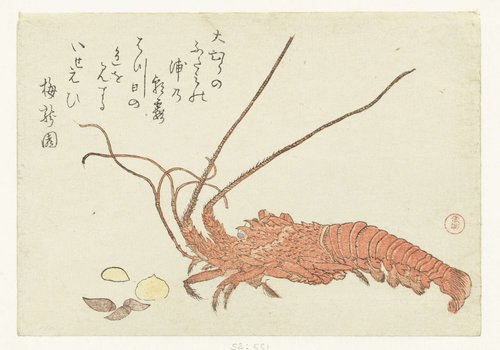
Lobster and Shells
ca. 1800 - ca. 1805
Medium
nishikie, with blindprinting
Dimensions
138; 198
Rights
Public Domain
About this artwork
height 138 mm x width 198 mm
Art Historical Context
Kubota Shunman (0–1844), a versatile ukiyo-e master of Japan's Edo period, crafted *Lobster and Shells around 1800–1805. This intimate print captures the delicate textures of marine life—a lobster amid shells—in a style blending realism with poetic elegance. Shunman's work often celebrated nature's fleeting beauty, reflecting the ukiyo-e tradition of "pictures of the floating world," where everyday wonders like seafood evoked seasonal abundance and impermanence. Printed in *nishikie* (brocade print), a multicolored woodblock technique that brought vibrant hues to life through precise layering of inks, the artwork measures a modest 138 × 198 mm, suggesting it may be a *surimono*—a custom, high-quality print commissioned for private circles, perhaps poets or New Year's greetings. Shunman's innovative use of *blindprinting* (*karazuri*), an embossing method creating raised, colorless textures, adds tactile depth to the shells' ridges and the lobster's exoskeleton, heightening sensory appeal without added color. This piece exemplifies early 19th-century Japanese printmaking's technical sophistication, bridging art and craft amid Edo's urban flourishing. Visitors, imagine holding this jewel-like work, its embossed surfaces shimmering under light—a testament to Shunman's genius in transforming humble subjects into enduring treasures.