
Locket
1766–76
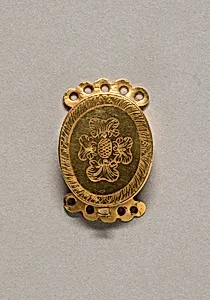
Medium
Gold
Dimensions
3.2 × 1.9 cm (1 1/4 × 3/4 in.)
Classification
locket
Department
Arts of the Americas
Museum
Art Institute of Chicago
Accession Number
76172
Rights
Public Domain
Art Historical Context
Nestled in the Art Institute of Chicago's Arts of the Americas collection, this delicate gold locket by Enoch Stanton, crafted between 1766 and 1776, exemplifies the exquisite metalwork of colonial America on the eve of the Revolution. Measuring just 3.2 × 1.9 cm, its petite scale belies its intimate purpose: lockets like this were cherished personal adornments, often enclosing miniature portraits, locks of hair, or love tokens, serving as poignant symbols of affection and memory in an era of uncertain times. Enoch Stanton, a skilled goldsmith likely working in New England, showcased mastery in handling precious gold—a material prized for its durability and luster, evoking wealth and sentimentality. The locket's compact form highlights the technical precision of 18th-century American jewelry, where chasing, engraving, or repoussé techniques transformed raw metal into wearable heirlooms. Though simple in design, it reflects the growing artisanal sophistication of the colonies, blending European influences with emerging American identity. Today, this unassuming treasure invites us to ponder the private lives of its long-ago owners, bridging the personal and the historical in a single, shimmering object. A testament to Stanton's craft, it underscores how everyday luxury items captured the emotional heart of Revolutionary-era society.