
Loie Fuller
Medium
Classification
Department
Smithsonian Collection
Museum
Smithsonian American Art Museum
Credit
National Portrait Gallery, Smithsonian Institution; Paul M. and Christine G. Wick Fund
Accession Number
NPG.2012.97
Rights
Public Domain
Tags
Art Historical Context
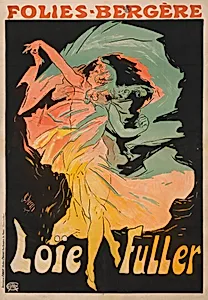
In 1897, French lithographer Jules Chéret immortalized the iconic American dancer and choreographer Loïe in this vibrant print, a staple of the Smithsonian American Art Museum's collection., a pioneering performer known for her innovative "Serpentine Dance," captivated Paris audiences during the Belle Époque with silk costumes illuminated by colorful lights, creating mesmerizing effects that blurred the line between dance and visual spectacle. Chéret's poster likely promoted one of her theatrical spectacles, showcasing her as a multifaceted innovator—dancer, designer, and inventor—who influenced modern performance art. Chéret, often called the "father of the poster," mastered color lithography in the late 19th century, revolutionizing advertising with bold, dynamic designs that brought theater and cabaret to life on city streets. His style featured swirling forms, vivid hues, and a sense of joyful movement, hallmarks of emerging Art Nouveau influences. This print exemplifies his technique, using layered lithographic colors to evoke Fuller's ethereal, fabric-whirling energy. Celebrated today in the National Portrait Gallery's holdings through the Paul M. and Christine G. Wick Fund, the artwork highlights the cultural fusion of American ingenuity and French graphic innovation, bridging stage performance with public visual culture. It's a window into an era when women like Fuller redefined artistry on their own terms.