
Long-bladed axe
Unknown Artist
ca. 1981–1550 B.C.
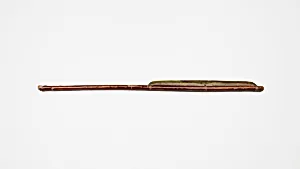
Medium
Copper, wood
Dimensions
L. 107 cm (42 1/8 in.)
Classification
Long-bladed axe
Period
Middle Kingdom–Early New Kingdom
Department
Egyptian Art
Museum
Metropolitan Museum of Art, New York, NY
Credit
Rogers Fund, 1929
Accession Number
29.2.13
Rights
Public Domain
Art Historical Context
This striking **Long-bladed Axe dating to ca. 1981–1550 B.C., hails from Egypt's Middle Kingdom through the Early New Kingdom (Dynasties 12–18). Measuring an impressive 107 cm (42 1/8 in.) in length, it features a blade mounted on a wooden haft—a testament to the era's advancing metallurgical expertise. Acquired by the Metropolitan Museum of Art through the Fund in 1929, it resides in the Department of Egyptian Art, evoking the grandeur of the Nile Valley's ancient workshops. In ancient Egyptian culture, such axes transcended mere utility, serving as potent symbols of power and protection. Wielded by pharaohs, nobles, and warriors, they featured in battles, royal hunts, and ceremonial rites, often depicted in tomb reliefs smiting enemies of order (chaos). The long blade design enhanced both reach and intimidation, while copper—prized for its durability before bronze's dominance—underscored technological innovation during this dynamic period of political unification and imperial expansion. Today, this artifact invites us to ponder the blend of craftsmanship and symbolism that defined Egyptian society, bridging everyday functionality with divine authority. A closer look reveals the ingenuity of its construction, preserved across millennia.