
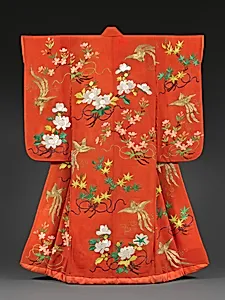
紅縮緬地鳳凰桜牡丹楓折枝模様振袖|Long-Sleeved Robe (Furisode) with Phoenixes, Cherry Blossoms, Peonies, and Maple Branches
Unknown Artist
mid-19th century
Medium
Crepe silk with silk and gold-thread embroidery
Dimensions
68 × 49 in. (172.7 × 124.5 cm)
Classification
Costumes-Embroidered
Culture & Period
Japan · Edo period (1615–1868)
Department
Asian Art
Museum
Metropolitan Museum of Art, New York, NY
Credit
Purchase, Anonymous Gift, 2018
Accession Number
2018.645
Rights
Public Domain
Tags
About this artwork
This long-sleeved robe, or furisode, displays phoenixes, cherry blossoms, peonies, and maple branches in elaborate embroidery, created in mid-19th century Japan during the late Edo period. The garment features a red crepe silk ground decorated with multicolored silk and gold-thread embroidery depicting auspicious motifs drawn from nature and mythology. The phoenixes symbolize virtue and grace, while cherry blossoms represent transience, peonies signify wealth and honor, and maple leaves evoke au...
Art Historical Context
This stunning *furisode*, or long-sleeved robe from mid-19th-century Japan the late Edo period (1615–1868), exemplifies the era's pinnacle of textile artistry. Crafted from red crepe silk and adorned with intricate multicolored silk and gold-thread, the garment measures an impressive 68 × inches, designed to drape elegantly on unmarried women. The trailing sleeves signaled youthful eligibility for marriage, while the lavish decoration showcased family wealth and refined taste, transforming clothing into a canvas of wearable art. The embroidery bursts with auspicious motifs: majestic phoenixes symbolizing virtue and grace, delicate cherry blossoms evoking life's transience, opulent peonies representing wealth and honor, and vibrant maple branches capturing autumn's beauty. These elements draw from nature and mythology, weaving a rich symbolic tapestry that reflects Edo Japan's aesthetic harmony and cultural depth. Japanese textile masters perfected techniques like embroidery on crepe silk, blending practicality with virtuosity. Acquired by the Metropolitan Museum of Art in 2018, this furisode highlights the sophistication of Edo decorative arts, inviting us to appreciate how garments once embodied personal and societal ideals.