
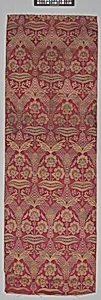
Loom Width with Floral and Tiger-stripe Design
Unknown Artist
16th century
Medium
Silk, metal wrapped thread; lampas (kemha)
Dimensions
Textile: L. 79 5/8 in. (202.2 cm) W. 26 1/2 in. (67.3 cm) Mount: H. 83 in. (210.8 cm) W. 30 in. (76.2 cm) D. 2 in. (5.1 cm)
Classification
Textiles-Woven
Department
Islamic Art
Museum
Metropolitan Museum of Art, New York, NY
Credit
Rogers Fund, 1944
Accession Number
44.41.3
Rights
Public Domain
Tags
Art Historical Context
This exquisite 16th-century loom width textile, featuring a vibrant floral and tiger-stripe design, hails the Islamic world and showcases the pinnacle of luxury weaving. Crafted from silk with metal-wrapped threads in the lampas (kem) technique—a complex method where supplementary wefts create raised, brocaded patterns—the fabric measures an impressive 79 5/8 inches long 26 1/2 inches wide. Acquired through the Rogers Fund in 1944, it now graces the Metropolitan Museum of Art Islamic Art department as a prime example of woven textiles. emha weaving, particularly prized in Ottoman Turkey during the empire's golden age, involved intricate looms operated by skilled guilds in cities like Bursa. The floral motifs, a recurring theme in Islamic art symbolizing paradise gardens, intertwine with bold tiger-stripe patterns, evoking both natural ferocity and rhythmic elegance. Metal threads catch the light, adding opulence fit for imperial garments, turbans, or ceremonial hangings. As a complete loom width, this piece preserves the weaver's original scale, offering a rare glimpse into Renaissance-era Islamic craftsmanship. Its enduring allure lies in blending technical virtuosity with poetic design, reminding visitors of textiles' role as cultural treasures in daily and elite life.