
"Louis XVI, Libérator"
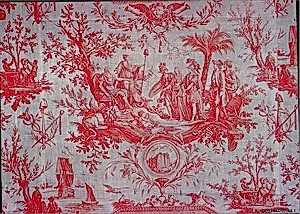
Medium
Linen, copperplate printed
Dimensions
H. 77 1/4 x W. 52 1/2 inches 196.2 x 133.4 cm
Classification
Textiles-Printed
Culture
French, Jouy-en-Josas
Department
European Sculpture and Decorative Arts
Museum
Metropolitan Museum of Art, New York, NY
Credit
Rogers Fund, 1927
Accession Number
27.44.1
Rights
Public Domain
Tags
Art Historical Context
Step into the vibrant world of 18th-century French textiles with *Louis XVI, Libérator*, a monumental copperplate-printed linen panel produced around 1789 by the renowned Oberkampf Manuf in Jouy-en-J, with designs by artist Jean-Baptiste Huet I Measuring an impressive 77¼ by 52½ inches, this textile exemplifies the *toiles Jouy* style—pastoral scenes printed in a single color on a white ground, often depicting idyllic landscapes, figures, and symbols of national pride. Here, the composition likely weaves together historical figures like King Louis XVI, majestic lions, sturdy trees, and ships, evoking themes of liberation and grandeur. Created on the eve of the French Revolution, the artwork's title casts Louis XVI as a heroic "Libérator," possibly alluding to his support for American independence or broader Enlightenment ideals of freedom. Yet, its timing adds poignant irony: 1789 marked the storming of the Bastille and the unraveling of the monarchy. Oberkampf's manufactory revolutionized textile production with copperplate printing, enabling intricate, multi-color designs on linen that were both affordable and luxurious for home furnishings like curtains and upholstery. This piece, now in The Metropolitan Museum of Art's European Sculpture and Decorative Arts collection (Rogers Fund, 1927), highlights France's cultural innovation in decorative arts. Huet's lively, narrative style brought history and fantasy to everyday fabrics, making high art accessible and preserving a snapshot of pre-Revolutionary optimism.