
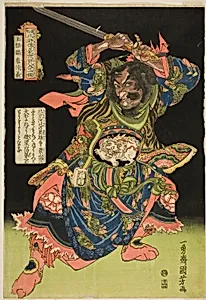
Lu Junyi (Gyokukirin Roshungi), from the series "One Hundred and Eight Heroes of the Popular Water Margin (Tsuzoku Suikoden goketsu hyakuhachinin no hitori)"
c. 1827/30
Medium
Color woodblock print; oban
Dimensions
38.3 × 26.3 cm (15 1/16 × 10 3/8 in.)
Classification
woodblock print
Department
Arts of Asia
Museum
Art Institute of Chicago
Accession Number
99496
Rights
Public Domain
Art Historical Context
Behold the fierce portrait of *Lu Junyi (Gyokukirin Rosh)*, one of the "One Hundred and Eight Heroes the Popular Water Margin"Tsuzoku Suikoden goketsu hyakuhachinin no hitori crafted by master ukiyo-e artist Utagawaiyoshi around 1827–30. This vibrant color woodblock print on *oban* paper (38.3 × 26.3 cm) Lu Junyi, a noble outlaw from the classic Chinese novel *Water Margin* (*Suikoden*), known as the "Jade Unicorn" for his elegance and martial prowess. Kuniyoshi depicts him in dynamic pose, likely adorned with intricate tattoos symbolizing his rebel spirit, embodying the heroic defiance against corruption. Produced during Japan's Edo period, this print reflects the explosive popularity of *Suikoden* after its 1807 Japanese translation, fueling a craze for warrior imagery. Kuniyoshi, a leading figure in the ukiyo-e tradition of "pictures of the floating world," revolutionized the genre with his bold compositions, expressive faces, and theatrical drama—hallmarks of his Musha-e (warrior print) style. His series immortalized the 108 Liangshan rebels, blending Chinese lore with Japanese printmaking flair. The woodblock technique shines here: multiple carved blocks layered with pigments create rich colors and fine details, making affordable art accessible to all. Housed in the Art Institute of Chicago's Arts of Asia collection, this piece invites you to step into a world of valor and rebellion, where heroes rise from the margins.
About the Artist
Utagawa Kuniyoshi · 1797–1861
Utagawa Kuniyoshi (1797–1861) was born in Edo to the silk-dyer Yanagiya Kichiyemon, originally bearing the childhood name Yoshisaburō. From a young age, he assisted in his family's pattern design work, which sharpened his innate mastery of color and textile motifs that would permeate his later prints. At around twelve years old, his prodigious drawing skills drew the attention of the renowned Utag...