
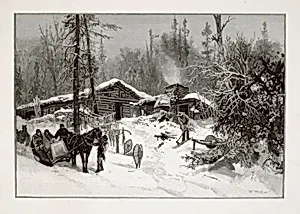
Lumbermen's Camp
1881
Medium
Graphic Arts-Mechanical Reproduction
Classification
Graphic Arts-Mechanical Reproduction
Department
Smithsonian Collection
Museum
Smithsonian American Art Museum
Credit
Smithsonian American Art Museum, Transfer from the Archives of American Art, Smithsonian Institution
Accession Number
1973.130.6
Rights
Public Domain
Tags
Art Historical Context
Henry Wolf's *Lumbermen's Camp (1881) captures a vivid snapshot of rugged American frontier life during the height of the lumber industry. This graphic arts mechanical reproduction depicts a bustling winter scene with horses, a sleigh laden with logs, a modest cottage, and a group figures amid snowy woods, evoking the harsh yet communal world of lumberjacks. Wolf, a skilled engraver and illustrator who emigrated from Hungary to the U.S., was renowned for his detailed renderings of everyday American scenes, often published in magazines like *Harper's Weekly*. Created in the late 19th century, the artwork reflects the booming logging era that fueled America's economic expansion, particularly in northern forests from Maine to the Great Lakes. Mechanical reproduction techniques, such as wood engraving or photomechanical processes, allowed intricate details—like the texture of snow and fur-clad workers—to be mass-produced, making art accessible beyond elite circles and preserving cultural narratives of labor and resilience. Housed in the Smithsonian American Art Museum, this piece highlights the transition from handcrafted prints to industrialized reproduction, underscoring graphic arts' role in documenting vanishing rural traditions amid rapid industrialization. A charming window into Gilded Age toil! (198 words)