
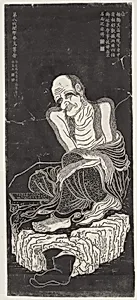
清 臨貫休十六羅漢圖 (拓片)|Luohan, after a set attributed to Guanxiu
stone carved in 1757; rubbing 18th or 19th century?
Medium
Ink on paper
Dimensions
Overall with mounting: 54 1/2 × 27 in. (138.4 × 68.6 cm)
Classification
Rubbing
Culture & Period
China · Qing dynasty (1644–1911)
Department
Asian Art
Museum
Metropolitan Museum of Art, New York, NY
Credit
Gift of Miss H. C. Wagner, 1959
Accession Number
59.195.5
Rights
Public Domain
Tags
Art Historical Context
This captivating ink rubbing on paper, titled *Luohan, after a attributed to Guanxiu transports visitors to the spiritual world of Qing dynasty China (1644–1911). Created from a stone carving dated 1757, with the rubbing likely produced in the 18th or 19th century, depicts one of the Sixteen Luohan—enlightened disciples of Buddha revered in Chinese Buddhism for their protective powers and ascetic wisdom. Measuring an impressive 54½ × 27 inches, artwork exemplifies the Qing fascination with emulating revered Tang dynasty (618–907) masters. The original set is attributed to the eccentric 10th-century monk-artist Guanxiu, whose unconventional portrayals of the Luohan—with exaggerated, weathered features and expressive faces—revolutionized Buddhist iconography, emphasizing raw humanity over idealized beauty. This stone-carved copy faithfully reproduces that distinctive style, preserving Guanxiu's legacy through the ancient Chinese technique of rubbing (tuben or拓片). Artisans inked damp paper over incised stone, capturing every line and texture for dissemination. Rubbings like this were vital for preserving impermanent carvings and spreading artistic and religious ideas across China. Donated to the Metropolitan Museum of Art in 1959, it invites us to ponder the Luohan's timeless role as guardians of the dharma, bridging centuries of devotion and artistry.
About the Artist
Unidentified ( ) · –